Car Parking Multiplayer Tuning Guide: Gearbox, Suspension and Engines
Tuning is where Car Parking Multiplayer turns from a driving game into a hobby. Two identical cars can feel like completely different machines once you start changing engines, gearboxes, suspension and drivetrains, and the difference between a good setup and a bad one is often bigger than the difference between two cars.
This tuning guide explains the most important upgrades in simple, practical terms: engine swaps and what they really change, gearbox ratios without the maths headache, suspension and ride height, brakes, and the differences between front-wheel, rear-wheel and all-wheel drive. You will also find a sample setup for speed, a sample setup for drifting, and answers to the questions tuners ask most. No engineering degree required.
How Tuning Works: Change One Thing at a Time
Before touching any slider, learn the golden rule of tuning: change one thing, test it, then change the next. If you alter the engine, gearbox and suspension all at once and the car feels worse, you will have no idea which change caused the problem. Patient, methodical tuning always beats random guessing.
Start with a clear goal for each car. A daily driver for parking levels and cruising needs different tuning from a top-speed machine or a drift car. Write down what the car should do well, tune towards that single purpose, and resist the urge to make one car do everything. Specialists beat generalists in tuning, just as they do in garages.
Finally, test in the conditions you actually play. A setup that feels perfect in an empty car park might overheat its tyres in a long online cruise, and a drag-racing gearbox will feel miserable in tight parking levels. Always do your final test where you intend to use the car.
Engine Swaps and Upgrades
The engine is the heart of any build, and upgrading it is usually the first step towards more speed. In simple terms, a better engine gives you more power, which means stronger acceleration and a higher top speed, at the cost of making the car harder to control and sometimes heavier at the front.
An engine swap, fitting a completely different engine, is the most dramatic change you can make. It can transform a humble hatchback into a genuine performer, but it also changes the car’s character: weight balance shifts, the power delivery feels different, and the gearbox and suspension may need retuning to cope. Think of a swap as a new foundation rather than a simple upgrade.
Smaller engine upgrades, such as improved intake, exhaust or forced induction parts where the game offers them, are gentler. They add power progressively, letting you learn the car’s new behaviour in steps. For beginners, this gradual path is far better than jumping straight to the most powerful option. A good rule is to upgrade until the car feels lively but still controllable, then stop and tune the chassis before adding more power.
Gearbox Ratios in Simple Terms
The gearbox decides how the engine’s power reaches the wheels, and understanding ratios is simpler than it sounds. Short gears give strong acceleration but lower top speed, because the engine reaches its limit quickly in each gear. Long gears give higher top speed but slower acceleration, because each gear has more work to do.
Think of it like bicycle gears. Low bicycle gears make it easy to pull away uphill but you spin out quickly on the flat. High bicycle gears are hard work to start but let you fly once moving. Car gearboxes work the same way.
For most driving, a balanced setup works best: gears short enough for lively acceleration out of corners, long enough that you are not constantly bouncing off the rev limiter on straights. If the game lets you adjust individual gears, start with the final drive ratio, which shifts all gears shorter or longer together, before fine-tuning single gears. Shorten it for twisty driving and parking agility; lengthen it for top-speed runs on open roads.
Pay special attention to first gear. Too short and the car just spins its wheels off the line; too long and it feels lazy pulling away. A first gear that launches cleanly with a little throttle control is worth more than any theoretical top speed figure.
Suspension and Ride Height
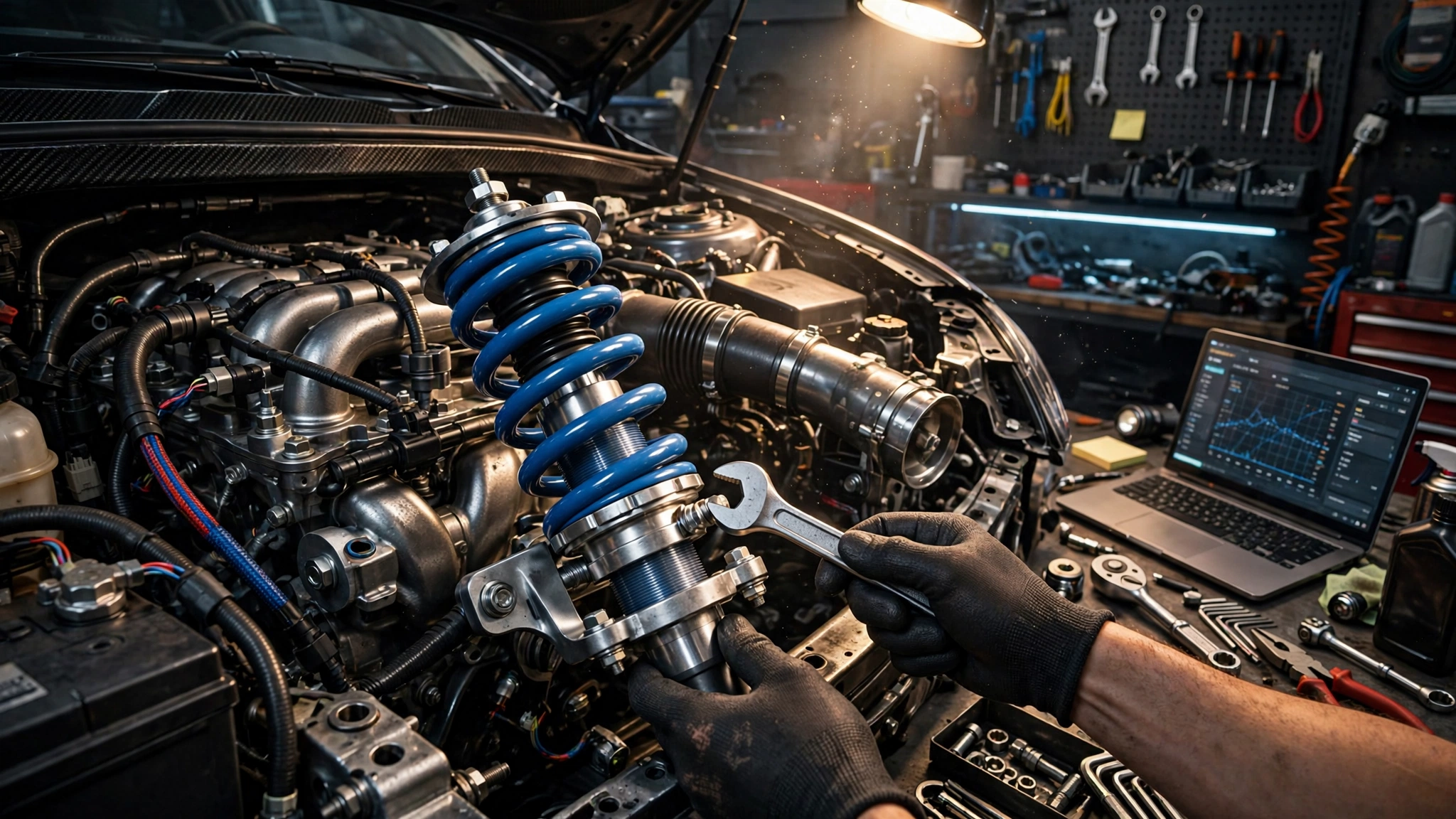
Suspension controls how the car’s body moves over bumps and how weight shifts in corners, and it has a bigger effect on feel than many players expect. Stiffer suspension keeps the car flatter and more responsive, which suits smooth roads and precise driving. Softer suspension absorbs bumps better and can feel more forgiving, but the car leans more and responds more slowly.
Ride height works with suspension. Lowering the car usually improves stability and cornering on smooth surfaces, but go too low and the car can bottom out on bumps or steep ramps, which upsets it badly. Raising the car helps with rough ground and steep entries, at the cost of a higher centre of gravity that makes the car lean more in corners.
For a daily driver, choose medium stiffness and a sensible ride height that clears the obstacles you actually meet. For a track-style build on smooth roads, go stiffer and lower in small steps, testing after each change. If the car starts skipping over bumps instead of absorbing them, you have gone too far. Damping, which controls how quickly the suspension moves, matters too: too little and the car bounces, too much and it feels harsh and nervous.
Brakes: The Most Underrated Upgrade
Beginners chase power; experienced tuners respect brakes. Better brakes let you stop later and with more control, which is worth real time on any route with corners, and they make parking levels far less stressful.
The key concept is balance. Brakes that are too strong at the front can lock the front wheels and push the car straight on; too much rear brake can make the back step out. If the game offers brake balance adjustment, start near the middle and move it slightly forward for stability or rearward for rotation, testing each change. Stronger brakes also generate more heat on long drives, so a setup that is perfect for short sprints might fade on a long cruise.
Drivetrain: FWD, RWD and AWD
Which wheels receive the engine’s power defines the car’s personality more than almost anything else.
Front-Wheel Drive (FWD)
In a front-wheel drive car, the front wheels both steer and pull the car along. FWD cars are usually stable and forgiving, which makes them excellent for beginners and for tidy parking. Their weakness is that asking the front tyres to do everything can lead to understeer, where the car runs wide in corners when you ask for too much at once. Drive them smoothly and they reward you with predictable, honest handling.
Rear-Wheel Drive (RWD)
Rear-wheel drive pushes the car from behind, which gives a lively, adjustable feel that enthusiasts love. RWD is the drivetrain of choice for drifting, because the rear wheels can be made to slide while the fronts steer. The trade-off is that powerful RWD cars demand respect: too much throttle too early in a corner will spin the car. Learn throttle control and RWD becomes the most rewarding layout to master.
All-Wheel Drive (AWD)
All-wheel drive sends power to all four wheels, giving superb traction off the line and in slippery conditions. AWD cars launch hard and feel planted, which makes them brilliant for fast road driving and for players who want speed without drama. They can feel less playful than RWD and sometimes push wide at the limit, but for covering ground quickly and safely, AWD is hard to beat.
| Drivetrain | Character | Best For |
|---|---|---|
| FWD | Stable and forgiving | Beginners, tidy parking |
| RWD | Lively and adjustable | Drifting, skilled drivers |
| AWD | Grippy and planted | Fast road driving, easy speed |
Sample Setup for Speed
For a top-speed and fast-road build, start with a meaningful engine upgrade and an all-wheel drive layout if the car supports it, since traction matters most when power is high. Lengthen the final drive ratio so the car keeps pulling on long straights, and set first gear for a clean launch without excessive wheelspin.
Choose medium-firm suspension with a slightly lowered ride height for stability, and upgrade the brakes so you can actually slow down from the speeds you will reach. Keep traction and stability aids on or only slightly reduced while testing; a fast car you cannot control is slower in reality than a slightly less powerful car you can drive confidently. Test on a long, open road, note where the car feels nervous, and soften the specific thing that causes it rather than changing everything.
Sample Setup for Drifting
For drifting, choose a rear-wheel drive car with moderate power; too much power makes the car snappy and hard to hold in a slide. Reduce or switch off traction and stability control so the car is allowed to slide, and use a medium-stiff suspension with a slightly lowered rear for predictable breakaway.
Shorten the gearing slightly so the engine stays in its responsive range during slides, and consider a more rearward brake balance to help rotate the car into corners. Practise in a wide empty area, starting with gentle slides at low speed before attempting linked corners. Smooth steering and small throttle corrections keep a drift alive; sudden inputs kill it. Expect many spins while learning; they are tuition fees, not failures.
Common Tuning Mistakes
The most common mistake is adding power before upgrading anything else. A car with huge power and standard brakes, soft suspension and long gearing is not fast; it is frightening. Balance the whole package instead.
The second mistake is copying someone else’s setup exactly. Setups depend on driving style, device, control method and even the game version. Use shared setups as starting points, then adjust them to your hands. The third mistake is tuning in the wrong place: always do final testing where you will actually drive the car, not just in the easiest available area.
FAQs
Learn the car standard first, then upgrade in balanced stages: moderate engine improvements, then brakes and suspension to match, testing after each step.
Shorter gears give stronger acceleration but lower top speed; longer gears give higher top speed but slower acceleration. Adjust the final drive first for overall character.
No. Lower and stiffer suits smooth roads, but too low causes bottoming out on bumps and ramps. Match ride height to the surfaces you actually drive on.
Front-wheel drive or all-wheel drive, because both are stable and forgiving. Rear-wheel drive is more fun once your throttle control is solid.
Usually because several things were changed at once or power was added without supporting upgrades. Return to standard, then retune one area at a time.
Not really. Speed setups maximise grip and stability, while drift setups deliberately reduce rear grip. Build two cars for two jobs instead of one compromised car.